

Columnist audience development is the practice of growing a loyal, engaged readership through consistent identity signalling, strategic content deployment, and structured community participation. The most effective columnists do not simply write well. They build systems. Evidence from leading Substack creators and journalism organisations confirms that how columnists build audiences comes down to three repeatable pillars: a clearly defined voice, short-form discovery content, and relational engagement that turns readers into advocates.
How columnists build audiences through voice and identity
The single most powerful audience-building tool a columnist possesses is a specific, ownable story. Generic advice columns attract surface traffic. Identity-led writing attracts the right readers, the ones who return, share, and eventually pay.
Profiling subscribers by demographics reveals a consistent pattern: when writers shift from tactical how-to content to relatable, experience-driven storytelling, retention improves and subscriber growth accelerates. The implication is direct. Readers do not follow topics. They follow people whose perspective they trust.
Niche positioning is the mechanism that makes this work. A columnist writing about British political commentary for a general audience competes with every outlet from The Guardian to the BBC. A columnist writing about how Westminster’s procedural culture silences backbench MPs occupies a far more defensible space. Specificity is not a limitation. It is a growth strategy.
- Define your core tension. Every compelling columnist voice is built around a recurring argument or worldview. Readers return because they want to see how you apply that lens to new events.
- Write from experience, not abstraction. First-person observation and specific anecdote outperform broad claims in both engagement and shareability.
- Audit your existing content. Identify which pieces attracted your most engaged readers, then reverse-engineer what those pieces had in common.
Pro Tip: Before writing your next piece, write one sentence describing the specific type of reader you are writing for. If you cannot name them precisely, your content will not find them reliably.
How do short-form posts on platforms like Substack Notes grow subscribers?
Short-form content is not a supplement to a columnist’s main work. For many writers, it is the primary discovery engine. Substack Notes drove over 70% of daily subscriber growth for one top creator who reached 16,000 subscribers. That figure reframes the entire content strategy conversation. Long-form posts build depth. Short-form posts build reach.

The mechanics matter here. An ideal Notes post runs to 250 characters, with a newsletter sending cadence of once or twice a week. This is not arbitrary. Short posts are optimised for the discovery feed, where readers encounter writers they do not yet follow. Longer posts serve existing subscribers. Conflating the two purposes produces content that does neither job well.
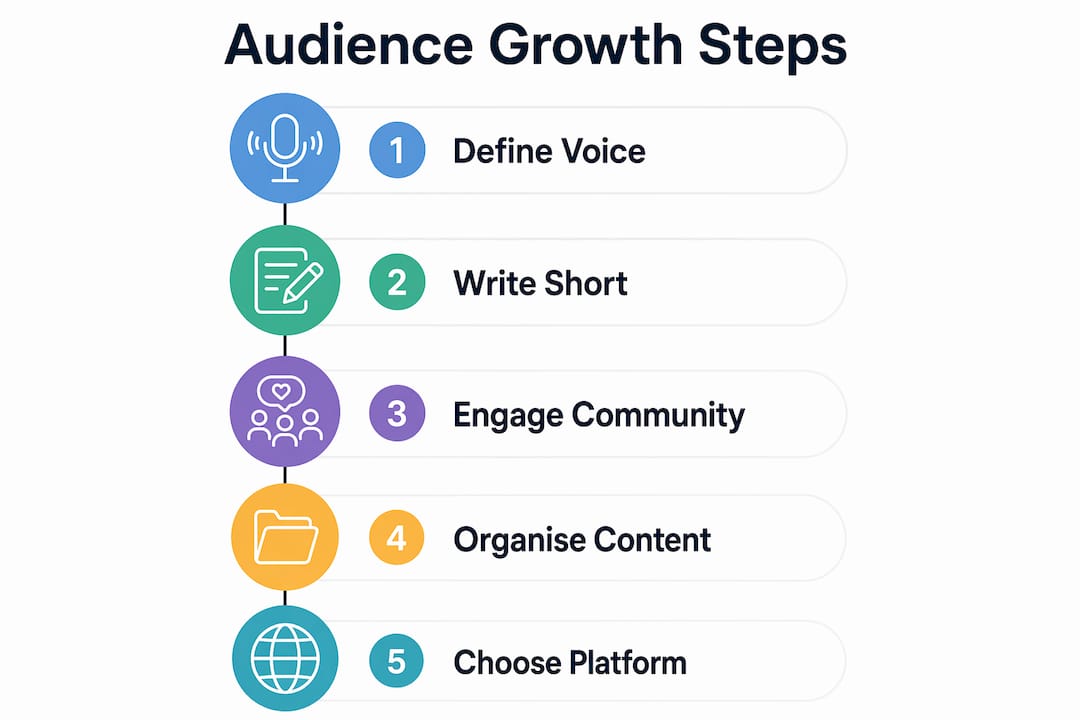
One writer reached 10,000 subscribers within 111 days of launching, a timeline that would have seemed implausible on traditional blogging platforms five years ago. The growth was driven by consistent short-form presence combined with a clear editorial identity. Speed of growth is not luck. It is the product of alignment between content format and audience intent.
To apply this practically, follow this sequence:
- Post a Note daily. Daily presence in discovery feeds helps algorithms stabilise audience matching and amplifies growth potential over time.
- Separate subscriber-driving Notes from engagement Notes. A Note that earns likes is not the same as a Note that earns subscribers. Track which posts convert, not just which ones resonate.
- Use Notes as a teaser, not a summary. End with an open question or partial insight that the full newsletter resolves. This creates a natural conversion funnel.
- Measure new subscribers per post, not aggregate likes. Adapting content formats based on conversion effectiveness rather than vanity metrics is what separates writers who grow from writers who plateau.
The broader lesson for growing a readership is this: the platform you choose shapes the audience you attract. Substack Notes rewards consistency and specificity. Social platforms reward speed and provocation. Match your format to the platform’s native behaviour, and your content will travel further with less effort.
What role does community engagement play in retaining readers?
Audience participation is no longer a nice-to-have feature of columnist publishing. It is becoming core publishing infrastructure. Readers who contribute, whether through comments, responses, or shared perspectives, develop a sense of ownership over a publication. That ownership is what drives return visits and word-of-mouth referrals.
The data from journalism organisations is striking. Toronto Star journalists saw 13 times more comments and 15 times more commenters during specific engagement windows when journalists actively participated in comment threads. Active presence does not just reward existing commenters. It signals to all readers that the columnist is listening, which lowers the barrier to participation for those who have never commented before.
“Community participation creates brand memory and makes readers return intentionally, beyond algorithmic referrals.”
The failure mode here is passive participation. Posting a question at the end of an article and then ignoring the responses is worse than asking nothing at all. Participation decay happens without a closed feedback loop. Readers who contribute and receive no visible acknowledgement stop contributing. The habit breaks, and with it, the relationship.
Structured participation beats ad hoc engagement every time. Consider these approaches:
- Respond to every comment in the first 48 hours. This is the window when engagement is highest and when your response will be seen by the most readers.
- Feature reader contributions visibly. Quote a reader’s insight in your next piece, credit them by name, and watch how many others begin contributing in hopes of the same recognition.
- Create recurring participation formats. A weekly question, a reader poll, or a “letters” section gives your audience a predictable way to engage, which builds the habit of returning.
For columnists writing about viral political commentary, the comments section is not just a feedback mechanism. It is a source of story ideas, a temperature gauge for reader sentiment, and a visible demonstration of community health to prospective subscribers.
How can columnists organise content operations sustainably?
Burnout is the most common reason promising columnists stop growing. The solution is not to write less. It is to write smarter through a repeatable content operations framework.
A rotating post structure assigns each piece of content a specific role: discoverability, relationship building, or conversion. This prevents the common trap of writing every post as if it must do everything at once. A discoverability post reaches new readers. A relationship post deepens trust with existing ones. A conversion post invites a specific action, whether that is subscribing, sharing, or upgrading to paid.
| Content role | Primary purpose | Format example |
|---|---|---|
| Discoverability | Attract new readers via feeds and shares | Short Note, opinion hook, topical reaction |
| Relationship | Deepen trust with existing subscribers | Personal essay, reader Q&A, behind-the-scenes |
| Conversion | Drive a specific action | Paid upgrade prompt, referral ask, event invite |
Batching is the operational complement to role rotation. Rather than writing each piece the day before publication, batching means producing several pieces in a single focused session. Planning, batching, and repurposing content can generate 12 to 16 pieces from a single core idea each month. One long-form essay becomes a Note, a social post, a reader question prompt, and a pull quote for a future newsletter. The idea does the work multiple times.
Pro Tip: At the start of each month, assign every planned post one of the three roles above before you write a single word. If you cannot identify the role, the post does not belong in your schedule yet.
What platforms and formats suit columnists building audiences in 2026?
Platform choice is a strategic decision, not a personal preference. Aligning content format with platform norms and audience intent produces measurably better engagement outcomes than distributing identical content everywhere. The columnist who posts a 1,200-word essay as a LinkedIn update and a 280-character tweet simultaneously is not doing multi-platform distribution. They are doing multi-platform dilution.
The most effective approach in 2026 combines a newsletter as the owned-audience anchor with one or two discovery platforms feeding into it. Substack serves both functions for many political and opinion writers. For columnists with an existing social following, platforms like X or Bluesky can drive newsletter sign-ups when posts are crafted specifically for those feeds rather than repurposed from long-form work.
Measuring format impact requires looking beyond likes and follower counts. The metrics that matter for strategies for audience growth are:
- New subscribers per post. This tells you which content format converts browsers into committed readers.
- Comment-to-view ratio. A high ratio signals content that provokes genuine response, which is the strongest indicator of community health.
- Share rate. Shares extend your reach to audiences you cannot access through your own network. Content that resonates with existing readers is the most reliable source of organic growth.
- Click-through rate on calls to action. This measures whether your audience trusts you enough to act on your recommendations, which is the foundation of any future monetisation.
For columnists writing about newspaper and media topics, understanding email newsletter strategies that drive real subscriber growth is worth studying in detail, particularly the mechanics of subject line testing and send-time optimisation.
Key takeaways
Building a loyal columnist audience requires a defined voice, short-form discovery content, active community participation, and a structured content operations framework working together.
| Point | Details |
|---|---|
| Voice defines growth | Identity-led storytelling attracts loyal subscribers rather than surface traffic. |
| Short-form drives discovery | Daily Notes or short posts are the primary subscriber conversion tool, not long-form essays. |
| Participation requires closing the loop | Responding to readers and featuring their contributions prevents engagement decay. |
| Content roles prevent burnout | Rotating posts between discoverability, relationship, and conversion creates sustainable output. |
| Platform alignment matters | Measuring subscribers and shares per post reveals which formats actually grow your readership. |
What I have learned about building a columnist audience
The conventional wisdom says consistency is everything. Write every week, show up reliably, and the audience will come. That is partially true, but it misses the harder lesson: consistency without identity is just noise. I have watched writers publish weekly for two years and barely move past a few hundred readers, not because their writing was poor, but because no one could explain in one sentence what the column was for.
The writers I have seen grow fastest are the ones who made a specific promise and kept it. Not “I write about politics” but “I write about how Westminster insiders talk to each other when the cameras are off.” That specificity is what makes someone forward a newsletter to a friend and say “you need to read this.”
The other thing I would push back on is the obsession with going viral. A single viral piece can spike your subscriber count, but it attracts readers who came for the spectacle, not the substance. The readers who stay are the ones who found you through a Note, read three back issues, and decided your worldview matched theirs. Those readers are worth ten viral tourists. Patience and precision beat volume every time.
Listening to your audience is not a soft skill. It is the most reliable editorial compass you have. The comments, the reply emails, the questions readers ask: these tell you what your column is actually doing versus what you think it is doing. The gap between those two things is where your next period of growth is hiding.
— John
Grow your columnist audience with Whitebunnywabbit
Whitebunnywabbit publishes opinion, commentary, and political analysis for readers who want substance over spectacle. If you are an aspiring columnist looking to sharpen your voice and understand what makes audiences stay, the resources at Whitebunnywabbit are built for exactly that purpose. From practical writing guides to editorial education, the education section covers the mechanics of columnist audience development in depth. For writers serious about publisher newsletter growth, the strategies covered there complement everything discussed in this article. Start with the fundamentals, apply them consistently, and your readership will follow.
FAQ
What is the fastest way to grow a columnist readership?
Short-form discovery content, particularly daily posts on platforms like Substack Notes, is the fastest documented growth lever. One creator reached 16,000 subscribers with Notes driving over 70% of daily subscriber growth.
How often should a columnist publish to build a loyal following?
A newsletter cadence of once or twice a week is the recommended frequency for sustained audience growth. Consistency matters more than volume, and quality long-form content paired with daily short-form posts produces the strongest results.
Why does audience participation improve columnist retention?
Readers who contribute to a publication develop a sense of ownership that drives return visits. When journalists actively engage in comments, participation rates increase dramatically, with some publications recording 13 times more comments during active engagement windows.
How do columnists measure whether their content is actually working?
New subscribers per post and share rate are the most reliable indicators of content effectiveness. Likes and views measure attention. Subscribers and shares measure trust, which is the metric that predicts long-term growth.
Can a columnist build an audience without social media?
Yes, through a newsletter-first strategy anchored by a clearly defined editorial identity. Writers who build on owned platforms like Substack are less dependent on social algorithms and retain direct access to their readers regardless of platform changes.
Leave a Reply