

Tracking a news story over time is the process of systematically capturing a story’s evolution from its earliest verifiable source through every material development, correction, and claim status change. Without a structured approach, context collapses. Facts from six months ago get confused with yesterday’s update, and corrections go unrecorded. Journalists, researchers, and informed citizens who build disciplined monitoring routines produce more accurate analysis and avoid the trap of treating old background as fresh news. This guide covers the tools, methods, and habits that make news timeline tracking reliable and repeatable in 2026.
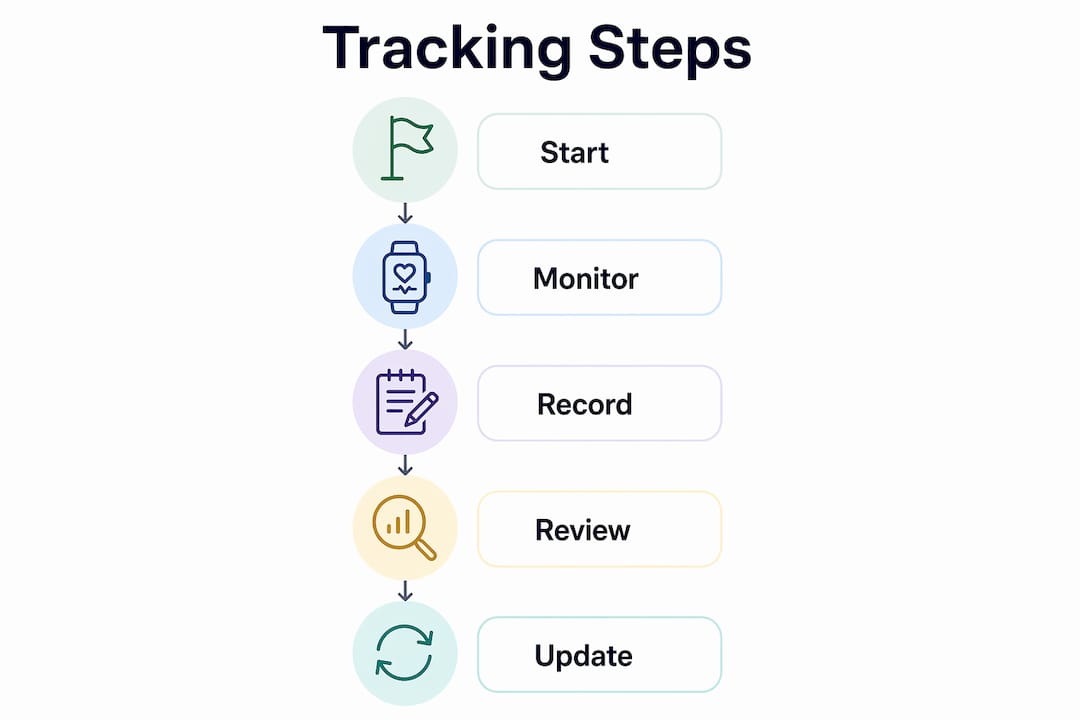
How to track a news story over time with the right tools
The right tools reduce manual effort and increase the speed at which you catch significant updates. Three broad categories cover most monitoring needs: content-only page monitors, RSS feed aggregators, and social media listening platforms. Each serves a different part of the tracking workflow.
Content-only page monitors detect changes on specific web pages and send alerts when new text appears. They work best for beat sources, such as a government department’s press release page or a court’s public docket. Automated web monitoring tools reduce manual checking by 100% for beat sources and alert in real time. That means you stop refreshing pages manually and start receiving notifications only when something changes.

RSS feed aggregators collect article headlines from multiple publications into one interface. They let you scan dozens of sources in minutes rather than visiting each site individually. Pair them with keyword filters to surface only the articles relevant to your story.
Social media listening platforms track conversation volume and sentiment across networks. They are most useful when a story is spreading rapidly and you need to understand public reaction alongside official reporting.
Pro Tip: Run any new automated tool alongside your existing manual routine for two weeks before relying on it fully. This trial period helps you tune alert sensitivity and filter out false positives caused by layout changes rather than genuine content updates.
Setting up alerts by keyword, author name, or specific source URL gives you granular control. Avoid broad keyword alerts on high-volume topics. They generate noise that buries the updates that matter.
| Tool category | Best use case | Alert type |
|---|---|---|
| Content-only page monitor | Beat source pages, court dockets, government releases | Page change detection |
| RSS feed aggregator | Multi-publication scanning by keyword or topic | New article headline |
| Social media listening | Conversation volume, sentiment shifts, hashtag clusters | Keyword spike or sentiment change |
How do you build a structured timeline for a news story?
A structured timeline is the backbone of any serious effort to follow news trends and preserve story context. Start with the earliest verifiable origin point and label it clearly with the publication name, timestamp, and the specific claim it introduced. Every subsequent entry follows the same format.
Each timeline entry should contain four consistent fields:
- Date and time — record the exact publication timestamp, not the date you discovered the article.
- Event label — a short phrase describing what changed or was confirmed (e.g. “First arrest reported,” “Government denies involvement”).
- Source type — classify the source as primary (official statement, court document), secondary (news report), or tertiary (commentary, opinion).
- Verification status — mark each claim as unconfirmed, confirmed, disputed, or corrected. Update this field whenever the status changes.
Distinguishing the earliest report from the latest verified fact is critical because corrections and updates are common in fast-moving stories. A claim that appeared confirmed in week one may be disputed by week four. If your timeline does not record that shift, you risk carrying an inaccurate narrative forward.
Separate background context from current developments in your timeline. Background entries explain the conditions that existed before the story broke. Current development entries record what changed and when. Mixing the two creates confusion when you return to a complex story months later.
Pro Tip: Set a fixed review cadence: weekly for active stories, monthly for slow-moving ones, and quarterly for dormant threads you want to keep alive. A regular schedule prevents gaps and stops the timeline from becoming stale without your noticing.
A structured archive entry should include the publication name, timestamp, a single new fact, and the source basis for that fact. Keeping each entry to one fact prevents conflation and makes the timeline searchable. When you need to return to a story after a long gap, a well-structured timeline lets you rebuild context in minutes rather than hours.
What mistakes should you avoid when following evolving news?
The biggest mistake in tracking evolving stories is focusing only on headlines. Headlines compress and sometimes distort. The detailed reporting chain behind a story contains the corrections, the sourcing caveats, and the context that headlines strip away. Reading the full article and recording the specific claim it adds is the only way to maintain an accurate picture.
A second common error is starting with too many sources. Begin with 5–10 dependable sources focused on your specific topic. Refine that list over two weeks based on which sources consistently produce relevant updates. Adding sources too quickly creates information overload before you have calibrated your alert settings.
Tracking a news story effectively requires preserving the entire reporting chain. Missing one correction or disputed claim can corrupt the narrative you carry forward, making every subsequent analysis less reliable.
Three further mistakes to avoid:
- Treating old content as new. When a search or alert surfaces an article from months ago, check the publication date before recording it as a development. Many aggregators resurface old articles when they receive new comments or shares.
- Ignoring corrections and retractions. Documenting corrections and disputes is as important as recording the original claim. A retraction that goes unrecorded leaves a false fact embedded in your timeline.
- Using content-change alerts on pages that update layout frequently. Content-only or reader-mode tracking avoids false positives triggered by navigation menus, advertisements, or cookie banners changing rather than editorial content.
Tuning alert frequency matters as much as source selection. Daily digest alerts work well for slow-moving stories. Real-time alerts suit breaking situations where missing a two-hour window has consequences.
How do news trends spread, and how can you analyse them?
News trends are clusters of conversation moving across platforms simultaneously, not single hashtags or isolated articles. Social listening identifies these clusters as they form, which is why combining platform-native cues with centralised analytic dashboards gives a fuller picture than either source alone.
Platform-native cues, such as trending topics on X or TikTok’s discovery feed, show you what is gaining traction. Centralised analytics tools explain why by aggregating volume data, sentiment scores, and keyword co-occurrence across multiple networks. Using both together lets you spot early signals before a story reaches mainstream coverage.
Configure alerts for three specific triggers:
- A sudden spike in keyword mention volume within a short window.
- A sentiment shift, where a story that was generating neutral coverage begins attracting strongly negative or positive reactions.
- The emergence of new keywords clustering around the original topic, which often signals a story is evolving into a new angle.
Visual analytics tools, including heatmaps and topic clouds, make pattern recognition faster. A heatmap showing geographic concentration of mentions can tell you whether a story is local, national, or international in its reach. A topic cloud shows which associated terms are growing in frequency alongside your primary keyword.
Pro Tip: Track the role of social media commentary separately from primary source reporting in your timeline. Social commentary often precedes official responses and can signal where a story is heading before journalists file their next piece.
Trend monitoring platforms track millions of websites and social networks, providing real-time alerts on conversation spikes and sentiment changes. That scale means you can catch a story gaining momentum in a niche community before it breaks into national coverage. Journalists who find important updates first shape the narrative. Focusing monitoring on critical beat sources specific to your topic improves the hit rate significantly.
Key takeaways
Tracking a news story over time requires a structured timeline, targeted tools, and a disciplined review cadence to preserve accuracy and context across every stage of a story’s lifecycle.
| Point | Details |
|---|---|
| Start with a structured timeline | Record date, event label, source type, and verification status for every entry from the earliest origin point. |
| Use the right tool for each task | Match content monitors to beat pages, RSS aggregators to multi-source scanning, and social listening to trend analysis. |
| Limit your source set initially | Begin with 5–10 dependable sources and refine over two weeks to reduce noise before expanding. |
| Record corrections explicitly | Update verification status fields whenever a claim is disputed or retracted to prevent inaccurate narratives persisting. |
| Review on a fixed cadence | Set weekly, monthly, or quarterly review schedules to keep timelines current and catch gaps before they compound. |
Why disciplined tracking changed how I read the news
The most common failure I see is not laziness. It is overconfidence in memory. Journalists and researchers who rely on recall rather than structured records consistently underestimate how much a story shifts over weeks. A claim that felt settled in month one often looks very different by month three, after two corrections and a disputed source.
My own approach changed when I started treating every story as a document rather than a stream. The moment I began cross-referencing news sources with a consistent entry format, I stopped losing context. I also stopped being surprised by corrections, because I had already flagged the original claim as unconfirmed.
The hardest discipline is resisting the urge to add more sources when a story feels complex. More sources create more noise. A tighter, better-curated list of 5–10 sources almost always produces cleaner tracking than a sprawling alert system pulling from 40 outlets. Start small, tune carefully, and expand only when a gap in your coverage becomes obvious.
Automated tools are genuinely useful, but they require human judgement to interpret. An alert tells you something changed. Only you can decide whether that change matters. The combination of a well-built timeline and a calibrated alert system is far more reliable than either approach alone.
— John
Whitebunnywabbit and structured news research
Whitebunnywabbit covers political analysis, international affairs, and current events with a focus on accuracy and context. For readers who want to go deeper into the archival and data management side of news research, the site’s future of data section covers how structured data practices support long-term research workflows.
Whether you are building a timeline for a single investigation or maintaining ongoing monitoring across multiple topics, Whitebunnywabbit’s editorial resources align with the best practices covered here. The 2026 guide to archiving news articles is a practical starting point for anyone ready to move from passive reading to structured research.
FAQ
What does it mean to track a news story over time?
Tracking a news story over time means systematically recording its evolution from the earliest verifiable source through every material development, correction, and claim status change. The goal is to preserve context and accuracy across the full lifecycle of a story.
How many sources should I monitor for a single story?
Start with 5–10 dependable sources focused specifically on your topic and refine that list over two weeks. Starting with too many sources creates information overload before your alert settings are properly calibrated.
Why is it important to record corrections in my timeline?
A correction that goes unrecorded leaves a false claim embedded in your tracking record. Updating the verification status of each entry whenever a claim is disputed or retracted prevents inaccurate narratives from carrying forward into your analysis.
What is the difference between a content monitor and a social listening tool?
A content monitor detects changes on specific web pages and alerts you when editorial text updates. A social listening tool tracks conversation volume and sentiment across social networks, showing how a story spreads and how audiences are reacting.
How often should I review my news timeline?
Review active story timelines weekly, slow-moving stories monthly, and dormant threads quarterly. A fixed cadence prevents gaps from accumulating and keeps your timeline accurate without requiring constant attention.
Leave a Reply