
Public broadcasting is defined as non-commercial media funded to serve the public interest, providing educational, impartial, and universally accessible content to all citizens. Unlike commercial broadcasters, public service media (the recognised industry term) operate under legal mandates to inform, educate, and reflect the societies they serve. Institutions such as the BBC in the United Kingdom, PBS and NPR in the United States, and ABC in Australia anchor this global system. PBS reaches 94% of households in the US, while NPR covers 98.5% of Americans through 1,216 stations. Those figures show just how deeply public media are woven into civic life.
What is the role of public broadcasting in education?
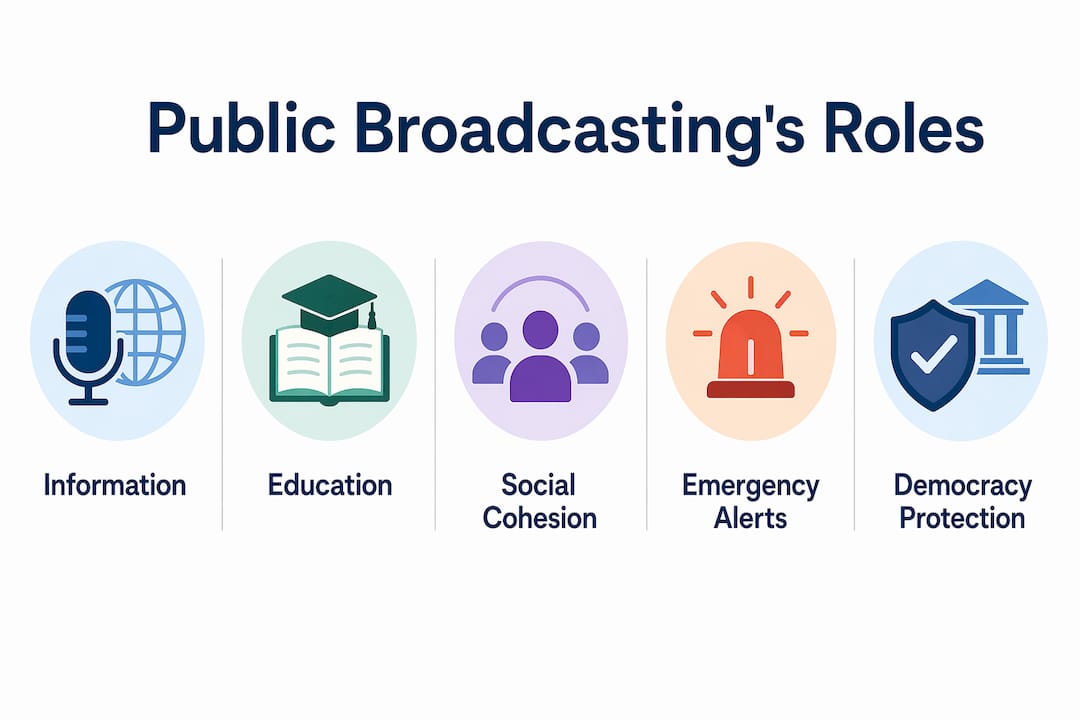
Public service media deliver educational content that commercial broadcasters rarely fund. Advertising revenue drives commercial decisions, which means niche, slow, or expensive programming gets cut first. Children’s literacy, adult education, and minority-language content all fall into that category.
The evidence for public broadcasting’s educational impact is concrete. PBS’s Ready to Learn programme, which includes Sesame Street, has produced measurable early literacy gains in children from low-income households. Research consistently shows that children who watch structured educational television enter school with stronger vocabulary and numeracy skills than peers without access. That gap is widest in rural and economically deprived areas, precisely where public broadcasting reaches furthest.
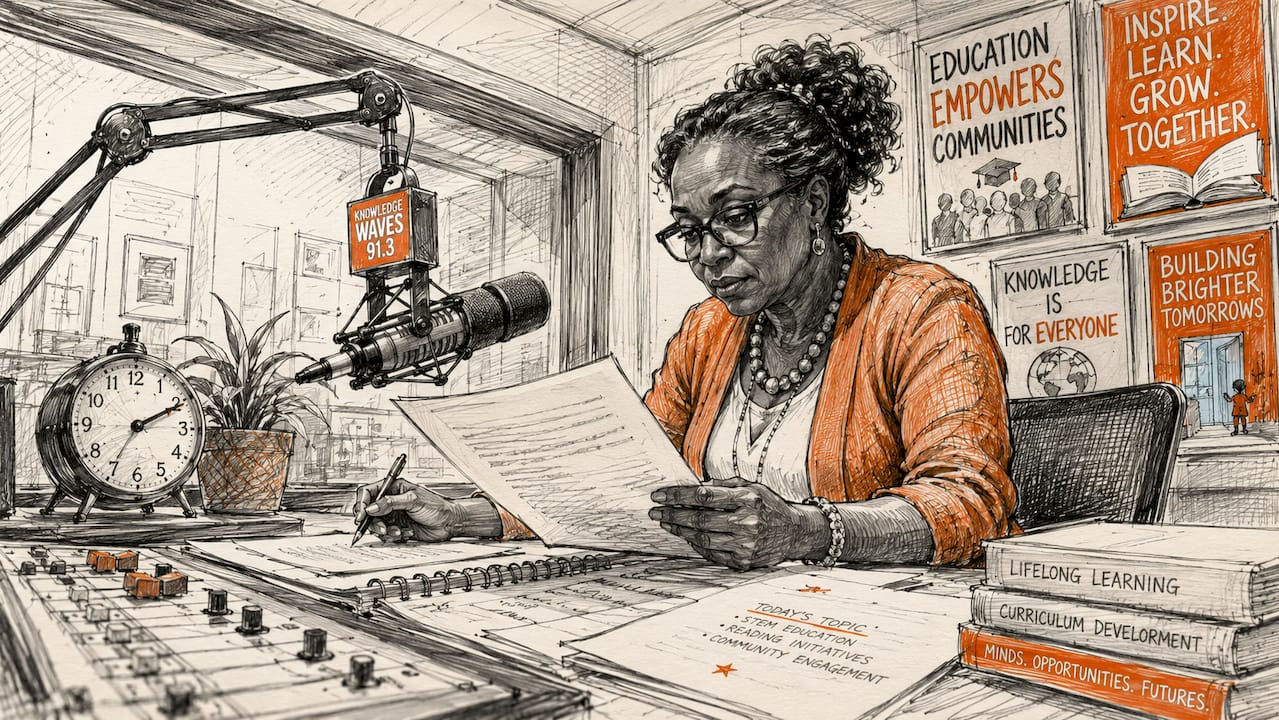
Public media also serve adults. Documentaries on history, science, and culture fill a gap that subscription streaming services leave open, since those platforms target paying subscribers rather than the general public. Cultural programming preserves languages, traditions, and regional identities that would otherwise receive no broadcast coverage.
Key educational functions of public broadcasters include:
- Children’s literacy and numeracy programmes targeting low-income households
- Adult education content covering science, history, and civic affairs
- Minority-language and regional-language programming
- Culturally significant documentaries and arts coverage
- Accessible formats for audiences with disabilities
Pro Tip: If you are researching public media’s educational impact, look specifically at longitudinal studies on early childhood television exposure rather than single-season viewing data. The long-term literacy effects are far more significant than short-term engagement metrics.
How does public broadcasting protect democracy?
Public service media function as essential democratic infrastructure by providing independent content free from advertiser and commercial pressure. That independence is not incidental. It is the structural feature that separates public broadcasting from every other media model.
Editorial independence matters most during elections and crises. Without public service broadcasters, citizens struggle to assess competing information claims because no balanced, accessible source exists. Commercial media serve their advertisers. Social media platforms amplify engagement over accuracy. Public broadcasters, by contrast, operate under editorial codes that require impartiality, correction of errors, and representation of diverse viewpoints. Understanding how media bias develops makes the structural difference of public broadcasting clearer.
The digital information environment has made this role more urgent, not less. Social media and AI-generated content amplify misinformation at scale. Public service media act as a reference point that audiences can return to when they cannot determine what is true.
“Strong public service media are a pillar of democratic security. They provide the independent, trusted information that citizens need to participate meaningfully in democratic life. Without them, the information space is left to commercial and political actors with their own interests.”
European Broadcasting Union, 2026
Political pressure on public broadcasters is a documented threat. Across Europe, governments have attempted to influence editorial decisions at national broadcasters. The European Media Freedom Act was introduced specifically to create legal protections for public service media independence. The role of media watchdogs in holding both governments and broadcasters to account is a related and equally important mechanism. Public media independence is undermined by political and financial pressures across Europe, which is precisely why legal protections such as the European Media Freedom Act exist.
How does public media serve social cohesion and minority communities?
Public broadcasting’s impact on social cohesion is most visible in multilingual and multiethnic societies. Commercial broadcasters serve majority audiences because that is where advertising revenue concentrates. Public service media carry a mandate to serve everyone, including linguistic minorities, regional communities, and marginalised groups.
Estonia provides one of the clearest examples. The country’s public broadcaster operates ETV+, a channel dedicated to Russian-speaking residents. ETV+ reached nearly 40% weekly viewership among Russian speakers by spring 2021. That figure matters because it shows a public broadcaster actively reducing the information gap between linguistic communities in a country where that gap carries real political consequences.
| Community served | Public broadcasting approach | Outcome |
|---|---|---|
| Linguistic minorities | Dedicated channels in minority languages | Reduced information isolation |
| Rural communities | Local radio and regional TV | Access to civic and emergency information |
| Low-income households | Free-to-air, licence-funded content | Equal access regardless of income |
| Indigenous communities | Language preservation programming | Cultural continuity and representation |
Local ownership and editorial standards produce the most durable public trust. Importing a foreign broadcasting model without adapting it to local editorial values consistently fails. Communities trust broadcasters that reflect their own lives, languages, and concerns. Public media that support marginalised voices build the kind of civic participation that commercial media cannot manufacture.
Pro Tip: When analysing public broadcasting’s social impact, compare weekly reach figures across demographic groups rather than total audience numbers. Reach among underserved communities is the more meaningful metric for assessing genuine inclusion.
What is public broadcasting’s role in emergency communication?
Public broadcasting is the sole reliable emergency communication channel in many rural areas when commercial infrastructure fails. Mobile networks overload during disasters. Internet services go down. Commercial radio stations may not have local staff or the mandate to broadcast continuously. Public broadcasters do.
The clearest recent example is Blue Ridge Public Radio during Hurricane Helene in 2025. When flooding cut off North Carolina communities from digital communication, public radio provided critical flood information that commercial and online platforms could not deliver. That is not an isolated case. It is the predictable result of public media’s structural commitment to universal coverage.
Public broadcasting’s emergency communication advantages include:
- Free-to-air transmission that does not depend on internet or mobile networks
- Legally mandated coverage of emergency alerts and public safety information
- Local staff with knowledge of affected communities and geography
- Continuous broadcasting capacity during extended crises
- Trusted source status that reduces panic and misinformation during emergencies
Commercial platforms have significant limitations in this context. Subscription streaming services carry no public safety obligation. Social media platforms amplify rumour as readily as fact. The democratic infrastructure argument for public broadcasting becomes most concrete during a flood or wildfire, when the question is not about editorial balance but about whether people live or die.
What challenges does public broadcasting face in 2026?
Public broadcasting faces its most serious funding crisis in decades. Federal funding cuts in the United States in 2025 triggered immediate operational strain across PBS and NPR member stations. The community response was significant: donations increased by £300 million and new donors grew by 84% in 2025–2026. That surge shows genuine public support, but philanthropy cannot replace stable government funding over the long term.
Stations are merging and cutting local content to survive financially. Local programming is the first casualty of budget pressure, which is precisely the content that serves rural, minority, and low-income audiences most directly. The communities with the least access to commercial alternatives lose the most when public broadcasting contracts.
The structural challenges extend beyond funding:
- Audience fragmentation across streaming platforms reduces traditional broadcast reach
- Younger audiences consume content through on-demand services rather than scheduled broadcasts
- Digital misinformation competes with public media’s trusted content at far greater speed
- Political pressure on editorial independence has intensified in multiple countries
- Advertising-funded digital platforms draw talent and production budgets away from public media
The policy outlook is mixed. The European Media Freedom Act offers a legal framework for protecting public service media independence in EU member states. In the United States, the funding model remains politically contested. Public broadcasters are adapting through digital distribution, podcast formats, and multi-platform content strategies. Adaptation is necessary, but it does not resolve the core tension between public service mandates and shrinking budgets.
Key takeaways
Public broadcasting is irreplaceable democratic infrastructure that delivers education, trusted information, social cohesion, and emergency communication to communities that commercial media consistently underserve.
| Point | Details |
|---|---|
| Unmatched reach | PBS and NPR together cover 94–98.5% of the US population, demonstrating the scale of public media’s civic footprint. |
| Democratic anchor | Public service media provide editorially independent news that citizens need to make informed decisions during elections and crises. |
| Social inclusion | Dedicated minority-language channels, such as Estonia’s ETV+, actively reduce information gaps between communities. |
| Emergency lifeline | Public radio is often the only functioning communication channel in rural areas during natural disasters. |
| Funding fragility | Federal cuts in 2025 triggered an 84% rise in new donors, but philanthropy alone cannot sustain long-term public service obligations. |
Why I think public broadcasting deserves more defence than it gets
Most media debates focus on bias, ownership, and political slant. Public broadcasting gets caught in those arguments, which obscures what it actually does. Strip away the political noise and you find an institution that teaches children to read, warns communities about floods, and gives Russian-speaking Estonians a reason to trust the country they live in. Those are not abstract democratic goods. They are concrete, measurable outcomes.
The funding crisis in 2025 revealed something important. When cuts were announced, 84% more people became new donors almost immediately. That is not a passive audience. That is a public that understands what it would lose. The problem is that donor surges are reactive and temporary. Structural public funding is what allows a broadcaster to plan a children’s literacy series five years out, not just keep the lights on this quarter.
The argument I hear most often against public broadcasting is that the internet makes it redundant. Blue Ridge Public Radio during Hurricane Helene answers that argument directly. When the internet went down, the radio stayed on. That is not nostalgia. That is infrastructure. The editorial independence that public broadcasters protect is harder to rebuild once lost than most people realise. Defunding a broadcaster is fast. Rebuilding public trust in a news institution takes decades.
— John
Whitebunnywabbit and the case for media literacy
Understanding public broadcasting’s societal role is part of a broader commitment to informed citizenship. Whitebunnywabbit covers the political and media stories that shape how institutions like public broadcasters are funded, defended, and challenged.
For readers who want to go deeper, the piece on why education matters connects media literacy directly to civic participation, which is the same argument that underpins the case for public service media. Whitebunnywabbit also examines how talk radio shapes opinion across the political spectrum, offering useful context for anyone studying how different broadcast models influence public discourse. If you follow the funding debates, the editorial independence arguments, and the democratic stakes, Whitebunnywabbit is where those threads come together.
FAQ
What is the main role of public broadcasting?
Public broadcasting provides non-commercial, editorially independent media that informs, educates, and serves all citizens regardless of income or location. Its core functions include impartial news, educational programming, and emergency communication.
How does public broadcasting differ from commercial media?
Public broadcasters operate under legal mandates to serve the public interest rather than generate advertising revenue. This means they cover underserved communities, minority languages, and public safety content that commercial media have no financial incentive to provide.
Why is public broadcasting important for democracy?
Public service media anchor reliable information during elections and crises by providing balanced, independent content free from political and commercial pressure. Without them, citizens have fewer trusted sources to assess competing claims.
How is public broadcasting funded?
Public broadcasters are typically funded through a combination of government grants, licence fees, and philanthropy. Following US federal funding cuts in 2025, donations rose by £300 million and new donors increased by 84%, though this does not replace long-term structural funding.
What challenges does public broadcasting face today?
The main challenges are federal and government funding cuts, audience fragmentation across digital platforms, and political pressure on editorial independence. Many stations are merging or reducing local content to manage financial strain in 2026.
Leave a Reply