
Which political podcasts should you follow right now?
The best political podcasts vary by commentary style, analysis type, and political lean, so there is no single universally correct answer. That said, UK listeners in 2026 have a genuinely strong shortlist to start from.
- The Rest is Politics — Alastair Campbell and Rory Stewart bring genuine insider knowledge to Westminster and global affairs. The format is conversational rather than combative, which makes it unusually listenable across party lines.
- The News Agents — Emily Maitlis, Jon Sopel, and Lewis Goodall deliver sharp, fast-paced daily news analysis. Strong on breaking stories and political context for UK and international events.
- The Politics Shed — A UK-focused show covering domestic policy and political debate, suited to listeners who want depth on British governance without the celebrity presenter angle.
- Left, Right & Center — A US-produced panel show that deliberately seats voices from across the political spectrum in every episode, making it one of the few formats built to reduce echo-chamber bias.
- Pantsuit Politics — Hosted by Sarah Stewart Holland and Beth Silvers, this show rejects outrage-driven formats in favour of civility and good faith. Available on all major platforms and accessible to UK listeners.
- Political Currency — Former Chancellor George Osborne and former Shadow Chancellor Ed Balls discuss UK politics and economics from opposite sides of the aisle. Particularly useful for understanding fiscal policy debates.
- Political Thinking with Nick Robinson — The BBC Radio 4 presenter interviews politicians and advisors in depth, drawing out the personal histories and ideologies that shape their decisions.
Table of Contents
- How to follow and choose political podcasts wisely
- Recommended political podcasts for UK listeners: a detailed guide
- 1. The Rest is Politics
- 2. The News Agents
- 3. The Politics Shed
- 4. Left, Right & Center
- 5. Pantsuit Politics
- 6. Political Currency
- 7. Political Thinking with Nick Robinson
- How to balance your political podcast diet
- How to find genuinely multi-perspective political analysis
- How to stay updated with new episodes and podcast trends
- Key takeaways
How to follow and choose political podcasts wisely
Choosing well matters more than choosing quickly. A few criteria separate genuinely useful shows from ones that just confirm what you already think.
Credibility markers to look for:
- Hosts who are transparent about their political leanings rather than claiming false neutrality. Truly “unbiased” podcasts are rare; intellectual honesty from a host who names their perspective is far more useful.
- Shows that invite guests who disagree with the host, not just allies.
- Episode formats that favour dialogue over monologue.
- Clear sourcing when statistics or policy claims are made.
Practical steps for following podcasts in the UK:
- Use BBC Sounds, Apple Podcasts, Spotify, or Pocket Casts to subscribe and receive automatic episode downloads.
- Create a named playlist or folder grouping your political shows separately from entertainment or culture podcasts.
- Set a weekly listening schedule rather than bingeing irregularly. Thirty minutes a day across two or three shows covers a broad range without overload.
- Check whether a show offers a premium tier. Many top political podcasts provide exclusive content via paid subscriptions, which can add meaningful depth beyond the free feed.
Pro Tip: Subscribe to at least one podcast that leans politically opposite to your usual preferences. Platform algorithms tend to recommend more of what you already listen to, so breaking out requires a deliberate choice, not a passive one.
Recommended political podcasts for UK listeners: a detailed guide
The shows below cover a range of formats, frequencies, and political leans. All are accessible to UK listeners via standard podcast apps.
| Podcast | Political lean | Frequency | Episode length |
|---|---|---|---|
| The Rest is Politics | Centre | 3x per week | — |
| The News Agents | Centre-left | Daily | — |
| Left, Right & Center | Centre (multi-perspective) | Weekly | — |
| Pantsuit Politics | Centre | Twice weekly | — |
| Political Currency | Centre (UK focus) | Weekly | — |
| Political Thinking with Nick Robinson | Centre | Weekly | — |
| The Politics Shed | Varied | Weekly | — |
1. The Rest is Politics
Alastair Campbell (former Labour communications director) and Rory Stewart (former Conservative minister) make an unlikely but effective pairing. Their disagreements are genuine, their access to political insiders is real, and neither performs outrage for effect. Episodes range from deep dives into international crises to candid Westminster gossip that rarely surfaces elsewhere.

2. The News Agents
Emily Maitlis and Jon Sopel left the BBC to build something faster and less constrained by institutional caution. The result is a daily show that covers breaking news with the confidence of journalists who have spent decades in the room. Lewis Goodall adds strong domestic policy coverage. It suits listeners who want their morning briefing to have an opinion attached.
3. The Politics Shed
Less prominent than the flagship shows but worth following for UK-specific policy depth. The format prioritises analysis over personality, which makes it a useful counterweight to the more presenter-driven shows on this list.

4. Left, Right & Center
The format is the point. Every episode seats a progressive, a conservative, and a centrist voice around the same topic, which means you hear the strongest version of each argument rather than a strawman. It is a US production, but the analytical framework translates directly to UK political debates.
5. Pantsuit Politics
Sarah Stewart Holland and Beth Silvers built their audience by doing the opposite of most political media: no shouting, no tribal point-scoring, no manufactured outrage. The show covers American politics primarily, but its approach to civility in political discourse is a model worth importing regardless of geography.
6. Political Currency
George Osborne and Ed Balls were on opposite sides of the 2010 spending debate. Now they host a podcast together. That history gives their conversations a texture that most political shows lack, particularly on economic policy, where both bring genuine Cabinet-level experience rather than commentary from the sidelines.
7. Political Thinking with Nick Robinson
Nick Robinson’s interview style is patient and probing rather than adversarial. The show draws out how politicians actually think, not just what they want to say on camera. For listeners interested in the psychology of political decision-making, it is one of the better options available on BBC Sounds.
How to balance your political podcast diet
Balanced consumption mixes “news-first” shows that prioritise facts with “commentary-heavy” shows that provide ideological context. Relying entirely on one type skews your understanding in different directions.
A practical structure for UK listeners:
- One daily news briefing (The News Agents or BBC Radio 4’s Today Podcast) to track current events.
- One weekly analytical show (The Rest is Politics or Political Currency) for deeper context.
- One deliberately cross-partisan show (Left, Right & Center or Political Currency) to stress-test your assumptions.
Avoid building a playlist where every host shares the same political instincts. The risk of echo chambers is not just ideological comfort; it is that you stop hearing the strongest counterarguments to your own position, which makes your thinking weaker, not stronger. Consulting curated editorial lists from across the political tradition, rather than relying solely on what your podcast app surfaces, is the most reliable way to keep your diet genuinely varied.
Shows that reject outrage as a format, such as Pantsuit Politics and Political Thinking with Nick Robinson, tend to produce better political thinking in their listeners. Outrage is engaging, but it crowds out nuance. The value of civility-first formats is not politeness for its own sake; it is that they model how to hold a strong view without dismissing the person who disagrees.
For a broader view of how media formats shape political opinion beyond podcasting, the Whitebunnywabbit guide on talk radio and opinion covers the wider ecosystem in useful detail.
How to find genuinely multi-perspective political analysis
No podcast is truly neutral, and expecting neutrality is the wrong standard. What you can reasonably expect is transparency: a host who names their perspective, invites genuine disagreement, and does not misrepresent opposing arguments.
Left, Right & Center is the clearest structural example of multi-perspective design. Political Currency achieves something similar through the personal history of its two hosts. For listeners who want to go further, the Whitebunnywabbit guide on finding contrarian viewpoints offers a practical framework for identifying shows that prioritise viewpoint diversity.
For tracking how political trends translate into data, resources like prediction market numbers can supplement podcast analysis with quantitative context, particularly useful when shows discuss electoral forecasts or policy outcomes.
How to stay updated with new episodes and podcast trends
Subscribing is the easy part. Staying genuinely current requires a few habits beyond pressing follow.
Turn on automatic downloads for your core shows so new episodes arrive before you go looking for them. Most podcast apps, including Pocket Casts, Overcast, and Apple Podcasts, let you set download preferences per show. Use this to prioritise daily briefings and delay longer analytical episodes for weekend listening.
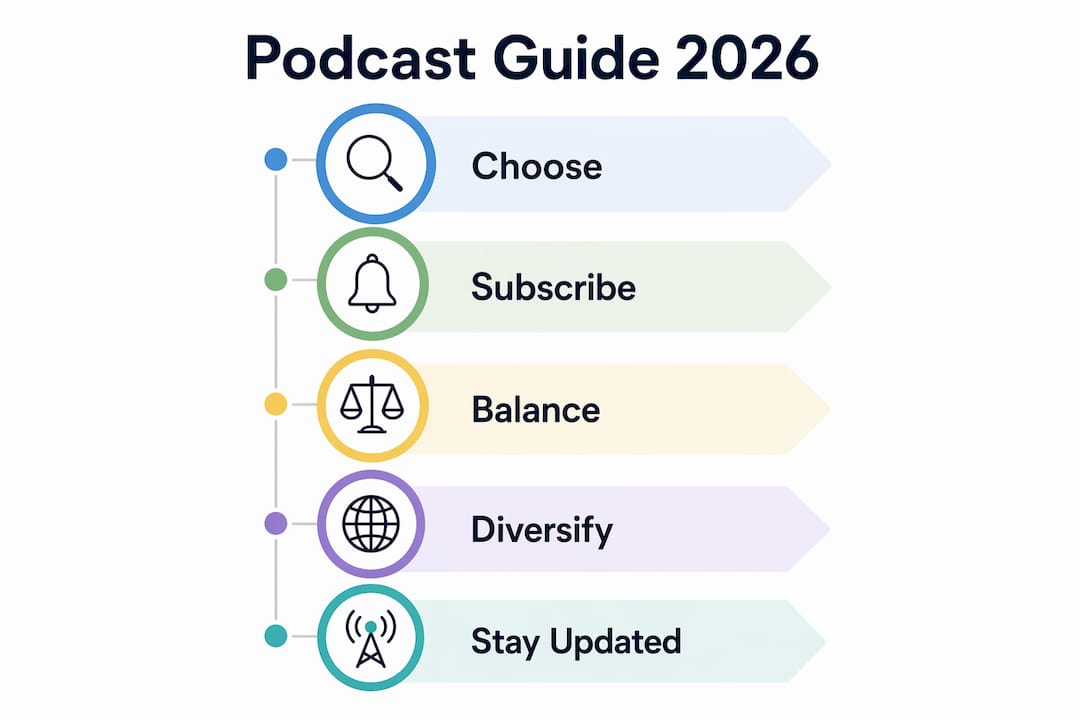
Follow the social accounts of your preferred shows. Hosts frequently flag bonus content, live events, or guest announcements that do not appear in the main feed. For shows with premium tiers, a paid subscription often unlocks early access and ad-free listening, which matters when a breaking story makes a particular episode time-sensitive.
Check curated editorial lists from publications such as The Week or the Financial Times periodically, rather than relying solely on what your app recommends. Platform discovery algorithms push similar content; editorial curation pulls in different directions. Refreshing your list twice a year keeps your political podcast diet from calcifying around the same three shows you found in 2023.
Whitebunnywabbit covers political education and commentary across a range of formats. For context on why political literacy matters beyond the podcast feed, read the piece on political education and justice.
Key takeaways
Following curated political podcast recommendations from across the political spectrum, rather than relying on platform algorithms, is the most reliable way to stay genuinely informed in 2026.
| Point | Details |
|---|---|
| Start with a shortlist | The Rest is Politics, The News Agents, and Left, Right & Center cover UK and global politics across different formats. |
| Prioritise transparency over neutrality | Hosts who name their political lean are more trustworthy than those who claim false balance. |
| Mix news and commentary | Pair a daily briefing show with one weekly analytical show for depth without overload. |
| Break the algorithm deliberately | Subscribe to at least one show that challenges your existing views; platform recommendations reinforce what you already listen to. |
| Use editorial curation | Refresh your podcast list using curated editorial sources twice a year, not just app suggestions. |
Leave a Reply